

Plant growth also means pot growth.
Figuring out when a plant needs to be repotted can be tricky, so here are some tips we have for you. This will help you determine if your plants need a new home. Identify your issue, and we’ll walk you through the steps of how to help.
Pot/Root Bound
Symptoms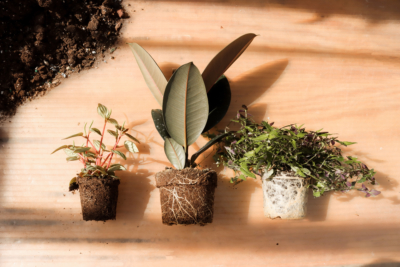
• Uneven ratio of roots to loose soil
• Soil dries out at an exponential rate
The photo shows the three major stages of roots. The first plant has far more soil than roots, which is a great indicator that there is a lot of room for the roots to grow. At this point, no repotting is necessary. The second plant’s roots are more apparent, but as you see, there is still an even ratio of roots to loose soil. This plant is just fine in the pot it is currently in. Be sure to keep an eye on the plant, as it is on its way to needing a new home. The last plant is drowning in its roots, and there is no loose soil. It is essentially one big root ball. At this point, your plant needs to be repotted immediately into a larger pot. Our recommendation is to repot your plant into a new pot that is around 1 – 1 1/2 inches wider in diameter than the previous pot.
Nutrient Deficiency
Symptoms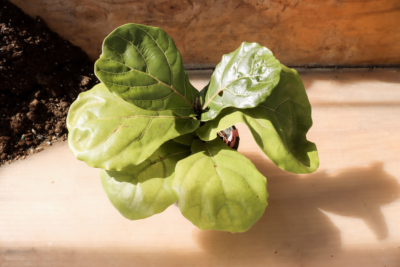
• Discoloration of leaves (yellow or sickly green)
In this photo you are able to see the bottom four leaves are a yellow/sickly green in color compared to the top two leaves. The two top leaves are new growth since being repotted with fresh soil, but the nutrient deficiency in the soil before hand is shown in the old growth in the bottom four leaves. Discoloration in leaves can also happen with under or over watering so be sure to monitor your watering schedule. Nutrient deficiency can be a result of old soil and/or a plant being root bound. If you find that your soil is nutrient deficient, all you need to do is repot your plant into new soil. If there are no signs of the plant being pot/root bound do not increase or decrease the size of the pot.
Old Soil
Symptoms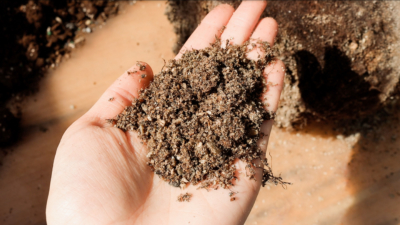
• The plant can’t hold onto nutrients and water because the soil is basically ‘dust’
Here you can see that the soil is quite ‘dull’, lacking color, and due to the lack of nutrients, the soil is quite sparse and dusty. Old soil is usually found when a plant has been potted in the same pot and soil for years and has matured as a plant. This is the least common, as it takes a long time for soil to become ‘old soil’, but still a sign that a plant needs to be repotted. If you find that you have old soil, all you need to do is repot your plant into new soil. If there are no signs of the plant being pot/root bound, do not increase or decrease the size of the pot.
When in doubt, pull your plant out of its pot, check the roots, the soil, your watering schedule, and the nutrients you are giving your plant. Evaluation is crucial before repotting. A misdiagnosis can lead to harm to your plants. Every plant is different, and truly, it depends. As much as it would be wonderful to have clear-cut rules and directions in caring for our plants, there is no “one size fits all” rule. This information is broad, and it is important to research your plant in particular to make sure you find the correct solution. If you are still unsure, please give us a call and ask; we’re more than happy to help you!